
In a sport where race vehicles are pushed to their absolute limits, it is easy to overlook one of the hardest-working machines in the service park – the recce vehicle.
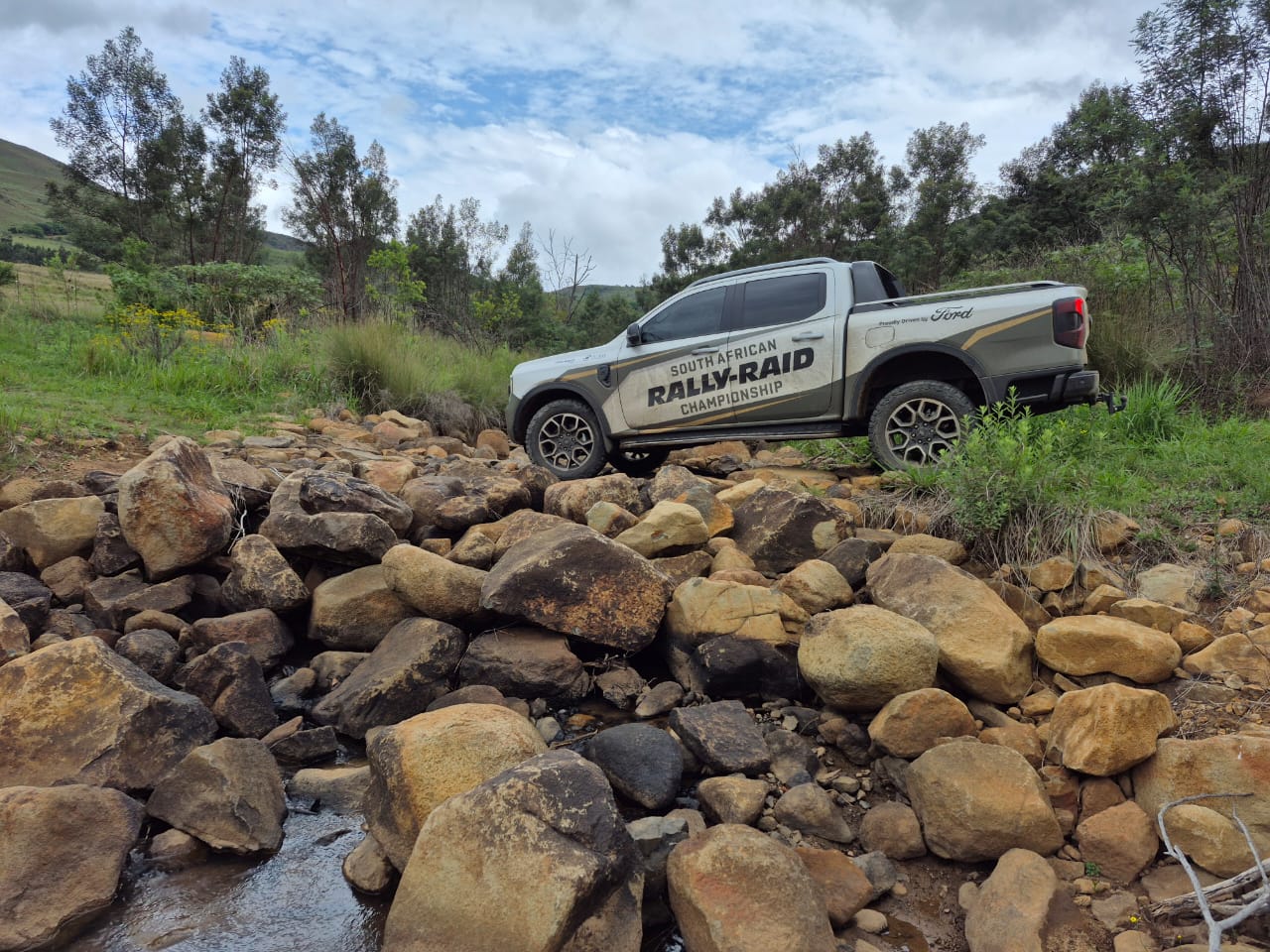
Long before the first competitive kilometre is raced in the South African Rally-Raid Championship (SARRC), the route and recce team is already hard at work, covering hundreds of kilometres through remote terrain, inspecting routes, checking access roads, assessing safety points, verifying navigation markers and ensuring every stage is ready for competition. And for the past season, one vehicle has quietly become the backbone of that operation – the rugged and uncompromising Ford Ranger.
While race vehicles may steal the spotlight, the recce vehicle arguably faces some of the toughest conditions of all. Unlike race cars that are heavily modified for competition, the recce vehicle remains largely standard production specification, enduring the same terrain with minimal changes beyond all-terrain tyres.
From deep sand and sharp rocks in the Northern Cape to thick mud, river crossings and technical farm tracks in the Free State and North West, the recce vehicle has to cope with it all – and do so reliably and comfortably.
“The reality is the recce vehicle does not get an easy life,” says Jaco Jonck, Competitor Relations Officer for the SA Rally Raid championship. “It is effectively the first vehicle into every route and often the last to leave. It carries equipment, personnel, recovery gear, navigation systems and communications equipment while operating in terrain most standard vehicles would never encounter.”
Over the course of a single season, the Ford Ranger recce vehicle can cover approximately 35 000 kilometres, with nearly 80% of that distance off-road, often in extreme heat, unpredictable weather and isolated conditions where durability and reliability are absolutely critical.
But toughness alone is not enough.
Jonck says a good rally-raid recce vehicle must strike a balance between durability, comfort, practicality and off-road capability. Teams spend long hours inside the vehicle during route surveys and event preparation, often travelling from sunrise to sunset. Fatigue becomes a real factor, making comfort and technology just as important as raw capability.
Some recce days begin before sunrise and only conclude after sunset, with route operations often limited only by available daylight.
That is where the Ford Ranger has proven itself uniquely well suited to the role.
“Its high ground clearance, advanced four-wheel-drive capability and robust suspension as standard allow it to confidently tackle difficult terrain, while its towing capacity and load space make it ideal for carrying the extensive equipment required during an event weekend.”
At the same time, modern safety systems, driver-assist technology and cabin comfort help reduce driver fatigue during the long operational days and commutes typical of rally raid.
“In many ways, the recce vehicle becomes a mobile office, workshop and recovery unit all in one,” he says. “Beyond recovery gear and navigation systems, it often carries operational equipment ranging from monitors and printers to event infrastructure needed during race weekends.”
There are also the inevitable battle scars that come with the territory.
Dust infiltration, stone damage, water crossings, punctures and endless corrugations are simply part of rally-raid life. Tyres, suspension components and underbody protection are constantly tested, while crews need a vehicle capable of withstanding sustained punishment without compromising reliability.
“The recce vehicle often goes where nobody else has gone yet,” explains Jonck. “If there is a problem on the route, it is the recce crew that usually finds it first. You need a vehicle you can trust completely because there are many situations where you are hours away from assistance.”
Jonck admits there were several occasions where the Ranger tackled obstacles the crew genuinely believed would bring the Ranger to a halt. Yet, time and again, the vehicle exceeded expectations, calmly and confidently traversing terrain that appeared impassable at first glance.
Yet despite the hard work, there is also an undeniable romance to the role.
Recce crews witness some of South Africa’s most spectacular landscapes long before race day arrives and have much more time to admire them. Sunrises over open plains, remote mountain passes, hidden river crossings and untouched bushveld become part of the experience. There is a unique camaraderie that develops during the long days on the road, built around problem-solving, adventure and a shared passion for rally-raid.
It is this combination of endurance, exploration and resilience that makes the recce vehicle such an important, and often underappreciated, part of rally raid.
“Because while competitors may ultimately battle for podiums and championship points, none of it would be possible without the countless unseen kilometres completed beforehand.
“And through every dusty trail, muddy crossing and punishing corrugated road, the Ford Ranger recce vehicle continues to prove why toughness, reliability and versatility remain essential ingredients in the world of rally raid,” concludes Jonck.
RECCE FAST FACTS
• Total km covered: 35 000km.
• Approximate off-road versus tar driving: 80% off-road / 20% tar.
• Ford model: Ranger 3.0L V6 Double Cab Wildtrak 4WD HR10AT 4×4.
• Toughest routes in season: Mountain passes of OUTENIQUA 400 and the plantations of VAPS HCV VRYHEID 400.
• Longest day on route: 06:00 to 18:30 at the Northam Platinum Bushveld 400.
• What’s harder – deep sand, rocky sections, mud, water or corrugations? Definitely mud.
• Knight in white armour? Yes – most memorable at VAPS HCV VRYHEID 400 where a farmer and land owner had broken down with his tractor and we were able to assist to get him on his way.
• Replacing tyres: Apart from three flat tyres at the first event when venturing to do a recce with normal road tyres (rookie mistake), the remainder of the season was done with a single set of all-terrain tyres.
• Standard recovery kit on vehicle: Kinetic Recovery Ropes (snatch ropes), shackles and connectors, air compressor, tyre deflators, tyre repair kit, saw, hammer, portable lighting, tool kit, jump starter pack, first aid kit, fire extinguisher etc.
• What components take the biggest punishment over a season? Suspension and shocks.
• Major failures or breakdowns during recce operations? None.
• Number of hours in the vehicle per event: 20 – 60 hours.
• Best scenery in championship: OUTENIQUA 400
• Two most important qualities of the vehicle: Durability and technology.
• One thing people would be surprised to learn about recce operations? The recce process is often equally mentally demanding and operationally complex as the race itself.
• If the Ford Ranger recce vehicle could tell stories, what would it say about life in rally raid? It would probably say that it didn’t sign up for this and rally-raid is far less glamorous and far more relentless than most people imagine.
A quality field of local and international teams have entered for the upcoming INGCO Parys 400 https://t.co/TU2aW9DEKZ #ArriveAlive #sarallyraidchampionship pic.twitter.com/qFAs27c7yW
– Arrive Alive (@_ArriveAlive) June 15, 2026
A year in the life of the Ford Ranger recce vehiclehttps://t.co/CaC50mP7xW#ArriveAlive @FordSouthAfrica @dealerfloor pic.twitter.com/Qi0EqQzjnn
– Arrive Alive (@_ArriveAlive) June 15, 2026